
GGC (Green GEN Cymru) unveils new monopole to support Wales’ electricity network.
GGC confirms that the next phase of its power network design review is progressing, with current engineering work indicating monopole structures around 22 metres tall for the Towy Usk and Towy Teifi projects. At around half the height of a typical 275kV pylon, a prototype is expected to be ready in early 2027.
Cardiff, Wales — Thursday 17 September 2026 — Designed specifically for the requirements of GGC’s developing 132 kV network, the new monopole has been commissioned by the GGC team with the Welsh landscape in mind. It will now be considered alongside wood poles, lattice towers and underground cables as part of GGC’s infrastructure toolkit, with GGC also exploring opportunities for the structures to be manufactured and fabricated in Wales as part of its ambition to maximise the Welsh economic benefit from investment in new electricity infrastructure.
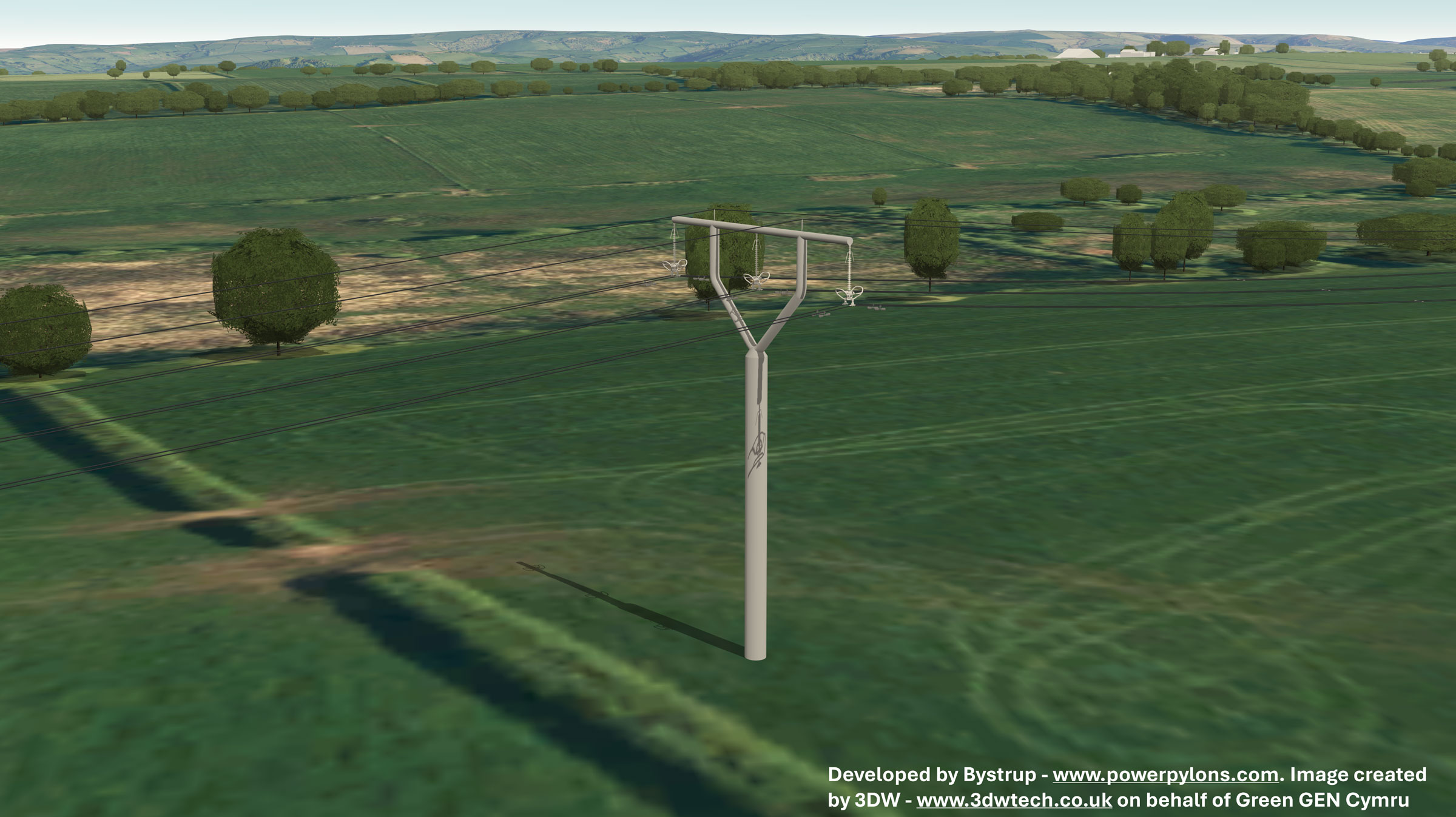
Monopoles are single-pole structures designed to carry significant electricity network capacity within a slim and compact profile. Their relative small ground footprint can help limit land requirements during construction, while their form has been developed with the aim of limiting visual impact in the landscape.
The development of the monopole forms part of GGC’s wider programme of investment in Wales’ electricity network. GGC plans to invest nearly £1 billion in new electricity infrastructure, and wants that investment to create opportunities for Welsh businesses, strengthen domestic supply chains and support high-value engineering and manufacturing capability in Wales.
In developing the design, consideration has been given to construction requirements, deliverability and the opportunity to draw on existing Welsh skills, fabrication capability and engineering expertise. The monopoles will be fabricated from structural steel, with their manufacture requiring steel fabrication, forming and welding, alongside associated engineering and finishing processes. These are capabilities with deep roots in the Welsh economy, creating an opportunity to build a Welsh supply chain around the next generation of electricity infrastructure and retain more of the value created by investment in the network within Wales.
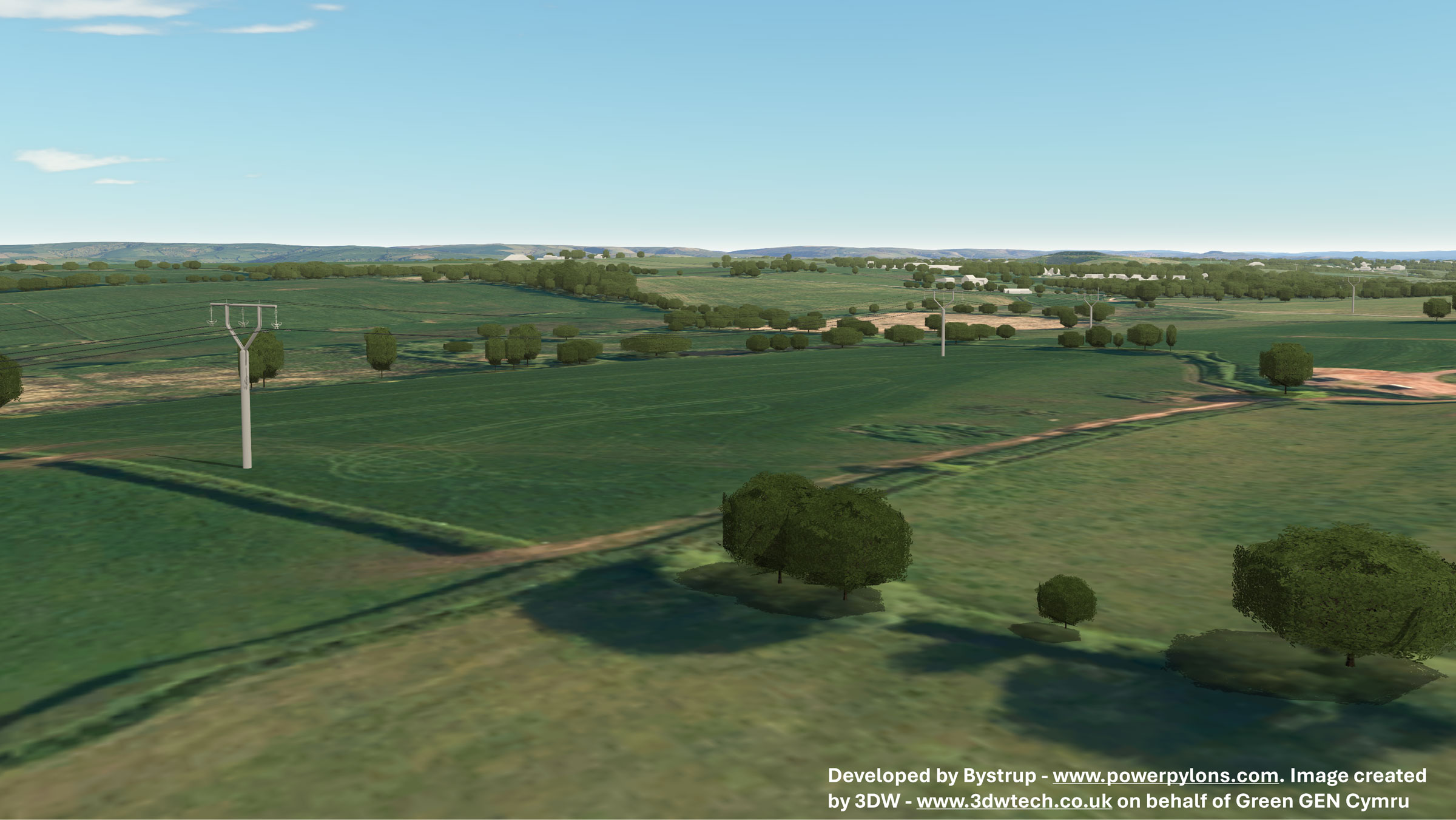
As the design progresses, GGC intends to engage with potential manufacturing partners across Wales to support the engineering development and future delivery of the monopole technology, bringing together expertise from across the manufacturing, steel and engineering sectors. The approach will aim to maximise opportunities for Welsh businesses to participate in GGC’s investment programme, support high-value jobs and skills, strengthen domestic manufacturing capability and help establish Wales as a centre for the development and delivery of modern electricity network infrastructure.
Ongoing design work indicates that the monopole structures will be around 22m in height, with the final dimensions dependent on the network configuration adopted. The design has been developed with the aim of reducing height where possible, while providing the much-needed new electricity network capacity required to strengthen the existing grid, connect new energy generation and meet growing demand for electricity.
GGC has also already secured approval and successfully completed type-testing of the ACCC Cardiff conductor. The technology can carry significantly more electricity than conventional conductors while enabling slimmer structures, supporting more efficient, resilient and lower-impact network designs. The Cardiff conductor will be used on the monopole.
Inspired by the simplicity of wood pole networks and monopole designs commonly used across Europe, the new structures have been developed with the aim of limiting visual impact while providing significant network capacity within a relatively compact design. The current monopole would typically be taller than wood pole structures, but shorter and with a smaller ground footprint than the steel lattice (L7) structures currently being considered elsewhere within the network.
The different technologies offer different characteristics and will continue to be assessed according to the requirements of individual projects and locations. Where monopoles are appropriate, their greater capacity compared with wood pole solutions could mean fewer parallel overhead line corridors are required. For example, to provide an equivalent level of network capacity, up to four separate wood pole corridors could be required compared with a monopole solution. This has the potential to reduce the overall amount and visual impact of infrastructure across the landscape, limit impacts on agricultural activity and land use, and provide a more coordinated and efficient engineering solution.
Andrew Hardcastle, Executive Director at GGC, said: “As demand for electricity increases, Wales will need more network capacity to connect new energy generation, support businesses, strengthen communities, improve productivity and attract inward investment.
“Our focus is to deliver the right infrastructure, in the right place, at the right time. There is no single infrastructure solution that is right for every landscape or community. Our role is to continually assess and develop the range of technologies available to us, so that we can select the most appropriate solution for the circumstances in front of us.”
“Developing the monopole, alongside our existing use of wooden poles, lattice structures, and undergrounding, gives us greater flexibility and helps ensure we can deliver the resilient electricity network Wales needs.”
Stephen Rowlands, Head of Construction and Supply Chain at GGC said: “Wales has a proud history of manufacturing and engineering, and we believe there is a real opportunity for Welsh industry to play a leading role in developing and delivering the next generation of electricity infrastructure.”
“As we take the monopole forward, we want to harness the skills, expertise and manufacturing capability that exists here in Wales. Our ambition is to work with Welsh businesses and the wider supply chain to develop that capability, support high-value opportunities and ensure that as investment in Wales’ electricity network grows, more of the economic benefit is captured here in Wales.”
